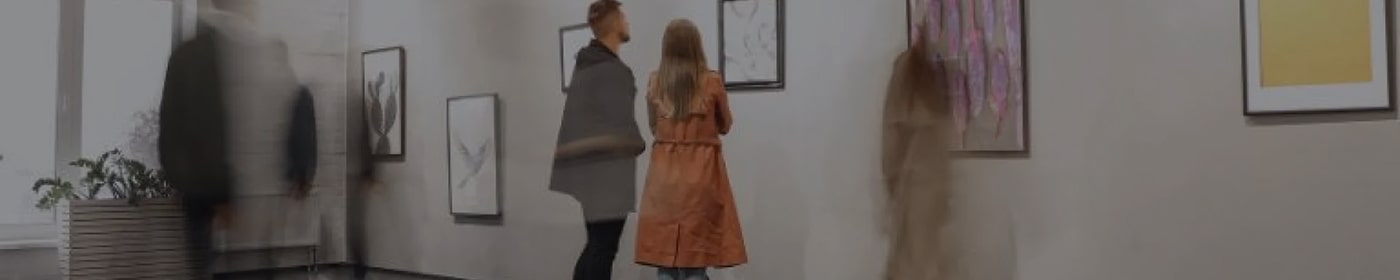
Art has long been understood as one of the most profound expressions of human creativity, reflecting collective values, emotions, and intellectual aspirations. In today’s cultural landscape, however, marked by the rapid expansion of digital platforms and the constant circulation of images and objects described as “art”, the role of curation has become increasingly central to how meaning is constructed and communicated.
Curation functions as a critical framework through which art is contextualized, interpreted, and valued. It shapes the narratives that connect artworks to historical, social, and theoretical contexts, and plays a decisive role in determining which works achieve cultural visibility and long-term significance. In an environment where artistic production is abundant and attention increasingly fragmented, curatorial practice provides the structure necessary to sustain critical engagement beyond momentary consumption.
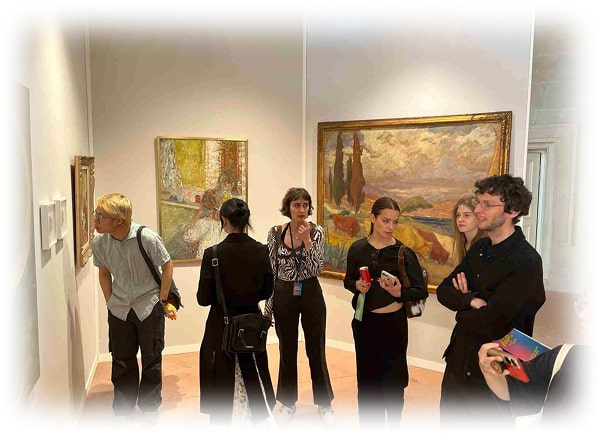
When artistic creation exists in isolation, disconnected from interpretation and thoughtful presentation, it risks being reduced to fleeting visual content. The future of the art world, and its capacity to contribute meaningfully to society depends not only on the production of artworks, but on the curatorial practices that frame, mediate, and activate them within institutional, educational, and public contexts.
The Role of the Curator Today
Every work of art can be understood as an argument; about aesthetics, history, identity, or society. Without thoughtful curation, these arguments risk dissolving into indistinct noise, easily lost in an era defined by cultural overload. The curator acts as a mediator and guide, providing structure, context, and narrative coherence that transform isolated works into meaningful cultural propositions.

At its core, art curation is a practice of selection, interpretation, and presentation. This mediating role encompasses research, conceptual development, exhibition programming, spatial design, cataloguing, public engagement, and increasingly, fundraising and institutional strategy.
Curation is therefore never neutral. Museums, galleries, and digital platforms operate within specific curatorial frameworks shaped by economic, political, and social forces. These frameworks influence which voices are amplified, which narratives are legitimized, and which aesthetic values dominate public discourse.
Over the past century, the curatorial role has evolved accordingly: from the early twentieth-century model of the curator as custodian, to today’s curator as producer, cultural strategist, and facilitator of interdisciplinary dialogue. Contemporary curators actively shape institutional identities and participate directly in the construction of cultural meaning.
Educational Pathways: Theory and Practice
Building a career in art curation requires a strong balance between in-depth knowledge and professional experience. While there is no single pathway into the field, formal academic training remains essential for developing the analytical, historical, and critical tools required to operate within today’s art and cultural ecosystems. Most curators begin with studies in art history, visual culture, or related disciplines, where they acquire visual literacy and methodological frameworks for analyzing artworks and exhibitions.
At IESA, curatorial education is an integration of theory and applied learning. Building on international models, IESA places strong emphasis on exhibition projects, institutional collaborations, case studies, and mentorship by active professionals. Students confront the realities of curatorial practice firsthand, from research and conceptual development to production, budgeting, communication, and audience engagement while working directly with practitioners from museums, galleries, auction houses, and cultural institutions.
This pedagogical approach also foregrounds ethical responsibility and critical awareness. Students are encouraged to question institutional hierarchies, examine issues of representation and access, and develop curatorial strategies that engage with diversity and global perspectives. In parallel, they are trained to use digital tools strategically, enhancing research, communication, and access without compromising curatorial rigor or contextual depth. Collaboration and interdisciplinarity are central to this model, reflecting the realities of contemporary cultural production and preparing students for professional adaptability.

Professional Experience and Research
Across the art world, one insight is consistently shared: practical experience is indispensable to building a career in art curation.
Internships, assistantships, and early professional placements allow emerging curators to translate academic knowledge into real-world application and gain exposure to the full lifecycle of exhibition-making. Institutions such as the Museum of Modern
Art (MoMA) exemplify this trajectory; according to its annual reports, more than 60% of MoMA’s curatorial staff began their careers as interns or assistants.
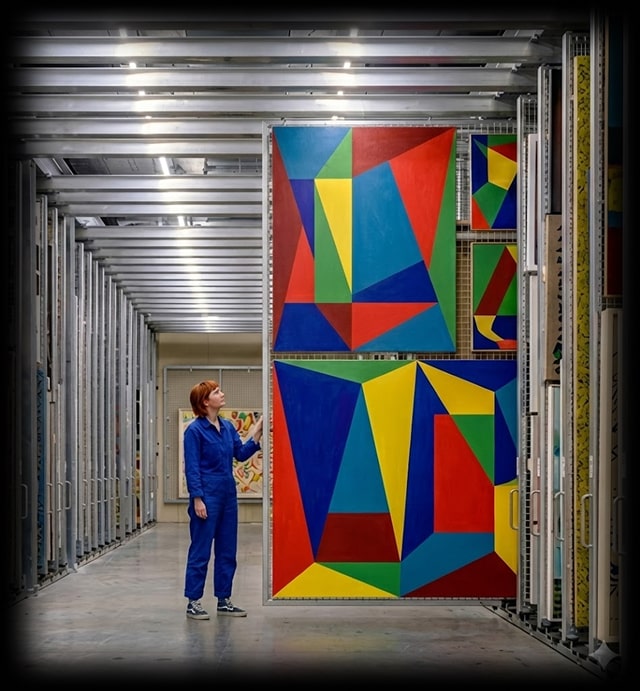
Professional experience is inseparable from research, which remains the intellectual backbone of curatorial practice.
Curators must investigate provenance, historical context, critical theory, and artistic intent in order to construct exhibitions that function as coherent and persuasive arguments.
Archives such as the Tate Archive in London and the Archives of American Art at the Smithsonian play a crucial role in research-based exhibitions, enabling direct engagement with primary sources and historical material.
Networks, Specialisation, and Institutional Contexts
Building a sustainable curatorial career depends as much on relationships and adaptability as on intellectual expertise. The art world operates through networks, and sustained engagement with artists, curators, collectors, and institutions often leads to professional opportunities. As Sarah Thornton observes in Seven Days in the Art World (2008), social capital and mentorship are integral to career progression rather than optional advantages. Mentors, whether encountered through formal programs or professional collaborations, offer strategic guidance, critical feedback, and access to institutional ecosystems.
Within this framework, developing a clear curatorial focus is essential. Specialization in specific artistic practices, regions, or thematic concerns allows curators to articulate a distinct professional identity and establish credibility. Equally important is the ability to navigate different institutional contexts. Curators work across museums, galleries, biennials, foundations, and hybrid cultural spaces, each with its own governance structures and expectations. Long-term success relies on balancing creative ambition with practical skills in leadership, diplomacy, budgeting, and stakeholder communication.
Building a Professional Curatorial Portfolio
A curator’s portfolio is a central career tool and often carries more weight than a traditional résumé. It should demonstrate curatorial thinking through concrete outputs, including exhibition proposals, project timelines, budget plans, writing samples, press coverage, and documented outcomes such as attendance figures or audience engagement metrics. According to job listings posted across various platforms, portfolios are increasingly decisive in recruitment processes because they showcase both conceptual vision and operational competence.

As curator Hans Ulrich Obrist famously stated, “Curating is not about selecting works—it’s about shaping ideas.” Building a career in art curation therefore means learning to operate at the intersection of ideas, institutions, and audiences.
It requires intellectual depth, professional agility, ethical awareness, and the ability to navigate complex cultural systems. In an art world defined by constant change, the curator’s role remains vital: not only to present art, but to ensure its meaning endures.

 Download application form