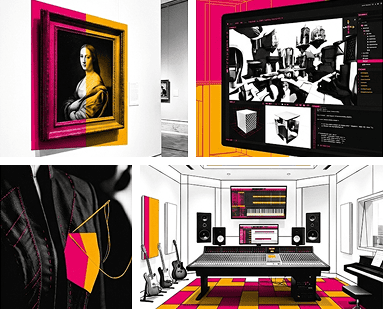
The cultural and creative industries have experienced significant expansion and professional diversification over the past two decades, evolving into a global economic and strategic sector.
No longer confined to traditional artistic or heritage institutions, today’s cultural ecosystem spans contemporary art, design, fashion, media, digital platforms, audiovisual production, gaming, and emerging cultural technologies.
The rise of digital media, new media, and innovative cultural formats has profoundly transformed how culture is produced, managed, distributed, and consumed, creating a wide range of new professional roles in digital strategy, content creation, audience development, cultural marketing, and creative project management.
A Global Strategic Driver
- At the international level, culture now plays a central role in economic development, innovation, and global influence.
- Governments and public institutions increasingly deploy culture as a tool of soft power and cultural diplomacy, supporting international exchanges, major exhibitions, festivals, and creative industries as vectors of influence and dialogue.
- In parallel, private companies across sectors, from luxury and technology to real estate and tourism, actively collaborate with artists and cultural organizations.
- These partnerships are integrated into brand strategy, corporate social responsibility (CSR), sustainability initiatives, and social impact programs, reinforcing the role of culture as a driver of meaning, identity, and engagement.
As a result, career opportunities in the cultural sector extend far beyond artistic practice alone.
The industry relies on highly skilled professionals in arts management, cultural entrepreneurship, production, curation, communication, fundraising, mediation, and strategic development to structure and sustain creative projects at a national and international scale.
While careers in culture are sometimes perceived as difficult to access, the reality is that the sector offers a dynamic, interdisciplinary, and evolving professional landscape.
For students and professionals with strong cultural knowledge, strategic thinking, and management skills, the cultural and creative industries represent a wide range of viable and future-oriented career paths.
Professional Domains and Cultural Sectors
The cultural industries extend across numerous professional areas, each with its own roles, expertise, and impact.
Understanding this diversity is key to identifying potential career paths:
Visual Arts
This sector includes painting, sculpture, photography, video, and digital arts, as well as arts markets, galleries, and expertise in art and antiquities. Professional roles range from curation and art advising to gallery management and art appraisal.
Music and Live Events
Careers in music encompass production, recording, event and festival management, artist representation, and music promotion, bridging artistry with business strategy in an increasingly globalized market.
Digital and Multimedia Culture
The rise of digital cultural production has broadened opportunities in multimedia content creation, animation, web design, game design, and digital curation, blending creativity with technology.
Performing Arts
The performing arts sector spans theatre, dance, circus, opera, mime, and street performance, involving not only creative practice but also production, direction, company management, and festival coordination.
Film and Audiovisual
This domain includes directing, screenwriting, editing, post-production, as well as production, distribution, and promotion of film and audiovisual content, from cinema to digital and streaming platforms.
Literature and Publishing
This field covers writing, literary criticism, book and magazine publishing, library science, and archival work, essential functions that support cultural expression and preservation in written form.
Research & Education
Professionals also work in academic research (art history, musicology, theatre studies) and education, from schools to universities, museums, and cultural institutions.
Heritage and Museums
Professionals in cultural heritage work in site management, preservation, museology, archaeology, conservation, and restoration. They play a vital role in protecting cultural memory and facilitating public engagement with history and heritage.
Cultural Management & Mediation
This includes cultural event organisation, audience engagement, policy development, and cultural programming, bridging artists, institutions, and communities to make culture accessible and meaningful for diverse publics.
Design, Decorative Arts & Fashion
Careers in this area span industrial, interior,
and graphic design, fashion creation, branding, and product management, fields where creativity meets consumer culture and market strategy.
A Multitude of Roles in Culture
Within each cultural domain, whether visual arts, audiovisual, music, heritage, design, fashion, digital media or live performance, cultural organisations rely on far more than artists alone. The cultural and creative industries are complex ecosystems that employ a wide variety of specialists to bring cultural projects to life, manage audiences, generate impact, and sustain growth.
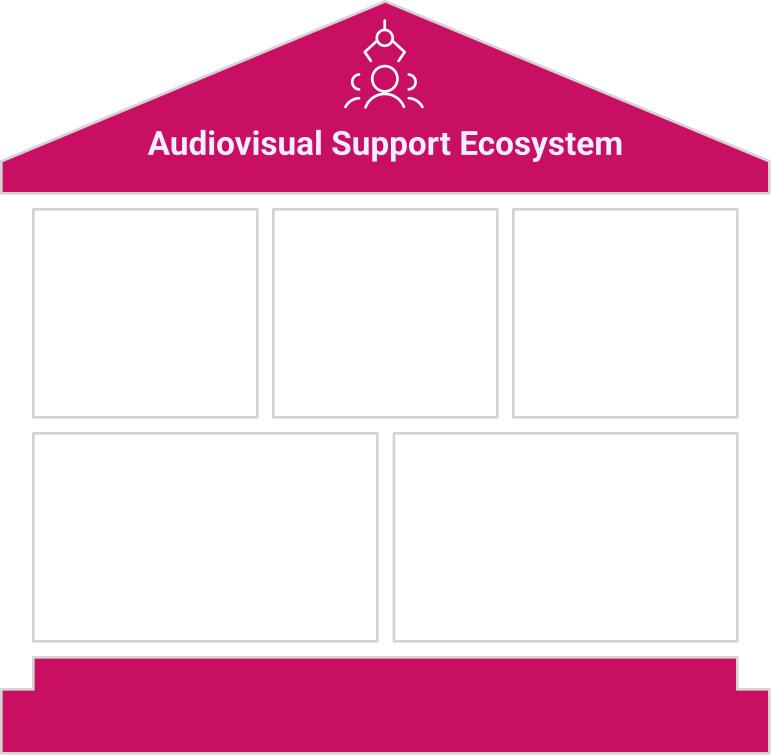
The Support Ecosystem
- Alongside artistic talent, the sector depends on technical specialists (such as stage managers, sound engineers, lighting designers and exhibition technicians) and production teams that ensure work is presented professionally.
- Project coordinators and administrators keep teams organised and schedules on track, while communications professionals, digital strategists, and press officers build visibility and engagement across global audiences.
- Curators, cultural mediators, education officers, and audience development specialists play a crucial role in interpreting, advocating for and broadening access to culture.
- Additionally, partnership and fundraising managers secure public and private support, a critical function in a sector where hybrid funding models are increasingly the norm.
Read also : How to Apply for a Student Visa in France
Economic Impact and Growth
Professional diversity is mirrored in real labour market growth. In 2024, cultural and creative employment in the European Union reached approximately 7.9 million people, representing about 3.8 % of total employment, and figures continue to grow as cultural employment rose year-on-year by around 1.9 %. A notable feature of this workforce is that almost one-third of cultural workers are self-employed, significantly higher than the average across all sectors, reflecting the prominence of freelance and independent career models in culture.
This growth is not limited to Europe. Regions like the Brussels-Capital Region, for example, report that one in ten jobs is linked directly to the cultural and creative industries, with employment rising more than 20 % over the last decade. Beyond employment, cultural activity sustains a significant economic footprint.
In France in 2024, cultural and creative industries generated over €100 billion in revenue and supported 586,000 direct jobs, a figure which exceeds one million when accounting for indirect and induced employment effects in related sectors such as tourism, transport, hospitality and services.
Cultural professionals also play roles that extend into global diplomacy and soft power, particularly through international cultural events, UNESCO partnerships, and government-led creative export strategies that position culture at the centre of sustainable development and intercultural dialogue.
The nature of cultural employment is evolving as well. Digitalisation has expanded roles in digital curation, immersive experiences, creative tech production, and platform-based content distribution. At the same time, traditional organisations like museums, theatres and festivals increasingly integrate data analytics, digital marketing and community engagement into their core strategies. Together, these factors reinforce that cultural careers are not niche or peripheral, they are at the heart of international creative economies, community innovation, and cultural exchange.
Professional Profiles and Job Titles
Here’s a selection of roles that illustrate the variety of career paths in culture:
Cultural Facilitators and Mediators
- Cultural Mediator:
Acts as an interface between audiences and cultural content, coordinating programming, publicity, budgeting, artist relations, and events to broaden access to culture. - Socio-Cultural Mediator:
Works with communities, in schools, youth centres, senior homes, or neighbourhood hubs, to encourage expression, creativity, and social exchange through cultural activities.
Tourism and Strategy Experts
- Cultural Tourism Manager:
Promotes the cultural identity of a region or territory, creating tourism offers that generate economic and community impact. - Cultural & Tourism Consultant:
Enhances cultural sites or experiences through strategic design, museum planning, visitor engagement, and attraction development.
Cultural Project and Heritage Specialists
- Cultural Project Manager:
Designs, organises, and promotes cultural events and programs, from exhibitions and workshops to festivals and artist encounters. - Heritage Site Administrator:
Manages the conservation, interpretation, promotion, and operations of historic sites, including financial and personnel oversight.
Partnerships, Communication & Public Engagement
- Partnership & Fundraising Officer:
Cultivates relationships with sponsors, donors, and partners, managing agreements and communications to support cultural initiatives. - Audience Development Manager:
Designs outreach strategies for diverse audiences, using digital tools and community programs to strengthen cultural participation. - Digital Communications Specialist:
Produces and manages content across online platforms, engages communities, and analyses audience insights to amplify cultural impact.
Most In-Demand Jobs in Culture
While artistic creation remains central, cultural organizations — whether museums, theatres, festivals, media outlets, or cultural agencies — typically recruit for roles linked to coordination, project management, and operational leadership.
These include:
- Project or programme managers coordinating teams, timelines, budgets, and objectives.
- Communications and public relations professionals building audience engagement.
- Production and distribution specialists facilitating cultural projects from conception to delivery.
- Administrative and financial coordinators managing contracts, budgets, and organisational logistics.
- Digital and media strategists driving online presence and engagement.
Salary Trends in the Cultural Sector
It is often difficult to identify a single, precise figure for the median salary in the cultural sector. This is due to the wide diversity of professions, organisations, and employment statuses it encompasses, ranging from salaried employees in public institutions to self-employed professionals working in the arts and creative fields.
Salaries vary considerably depending on the size of the organisation, geographic location, type of contract (fixed-term, permanent, freelance), as well as the level of experience and specialisation. In addition, some cultural professions are highly specific and relatively limited in number, which makes statistical data less robust.
By way of example:
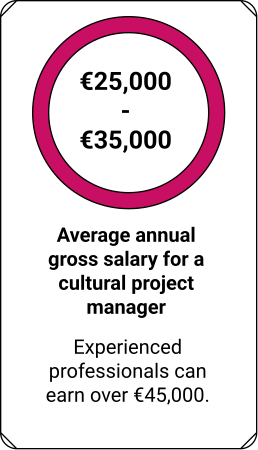
Cultural Project Manager:
The average annual gross salary for this role ranges between €25,000 and €35,000. Experienced professionals may earn over €45,000 gross per year, depending on project complexity and level of experience. (Source: Hellowork.com – Job profile: Cultural Project Manager – France – Consulted on 22/05/2025).
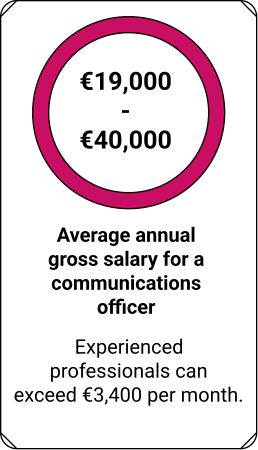
Communications Officer:
The average annual gross salary for a communications officer ranges between €19,000 and €40,000. Entry-level profiles may start at around €2,000 gross per month, while experienced professionals can exceed €3,400 gross per month.(Source: Hellowork.com – Job profile: Communications Officer – Consulted on 22/05/2025).
Conclusion: A Growing Landscape
Far from being a limited or niche field, the cultural and creative industries continue to expand as they intersect with technology, tourism, heritage preservation, media, and global audiences. International cultural policy, digital platforms, creative entrepreneurship, and cross-sector collaborations increasingly drive demand for professionals capable of strategic thinking, project management, and innovation. Careers in culture today extend well beyond creative practice alone, encompassing leadership, community engagement, cultural diplomacy, and sustainable development at local, national, and international levels.
Within this evolving landscape, IESA International prepares students to meet the realities of contemporary cultural careers through practice-oriented education, strong industry connections, and an international outlook. By combining academic foundations with professional methodologies, applied projects, and exposure to real-world cultural ecosystems, IESA equips graduates to contribute effectively to cultural organisations, creative enterprises, and global institutions. Programs such as the MBA in Arts & Cultural Management and MBA in Contemporary Art: Sales, Display and Collecting, provide students with the strategic, managerial, and analytical skills required to build sustainable, impactful careers within the global cultural and creative industries.

 Download application form