
France is one of the world’s leading destinations for international students, combining academic excellence with a rich cultural and professional ecosystem.
Each year, thousands of students choose France to pursue studies in fields such as art, culture, fashion, heritage, and the creative industries, disciplines in which IESA International has built a strong international reputation.
For non-European students, obtaining a French student visa is a crucial step in beginning their academic journey. While the process is regulated and detailed, it is entirely achievable if all the steps are followed correctly.
>This guide explains the student visa application process step by step and answers the most frequently asked questions from IESA International applicants.

Understanding the French Student Visa (VLS-TS)
Students who are not citizens of the European Union, the European Economic Area, or Switzerland and who plan to study in France for more than 90 days must apply for a long-stay student visa (Visa Long Séjour Étudiant – VLS-TS).
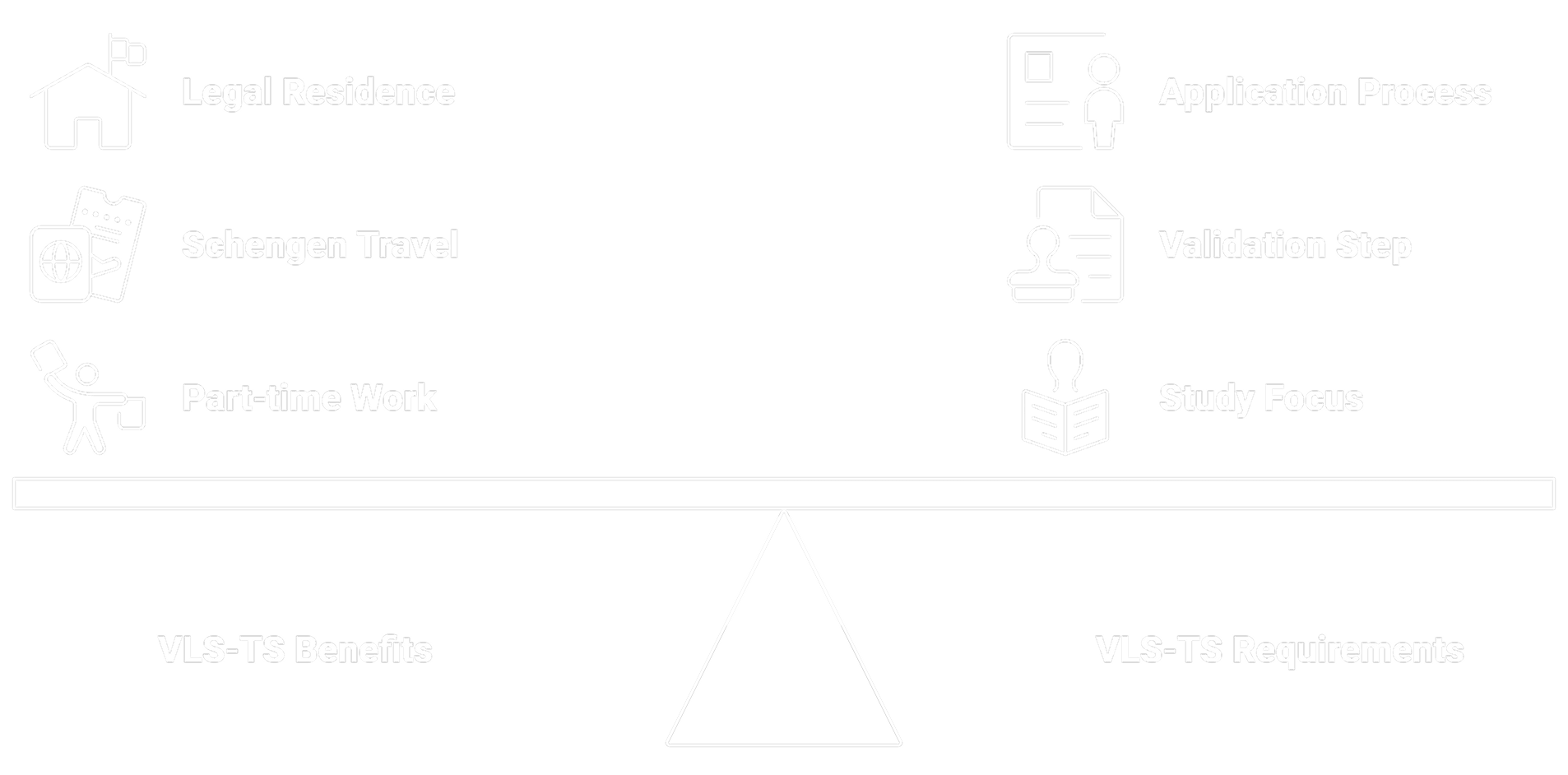
This visa allows you to:
- Live legally in France for the duration of your studies
- Travel freely within the Schengen Area
- Work part-time while studying
- Validate your status as a student resident after arrival
Once validated, the VLS-TS functions as both a visa and a residence permit.
Step 1: Obtain Admission to a Recognized Institution
A formal acceptance letter from a recognized French higher education institution is mandatory for your visa application.
Institutions such as IESA International, which are officially registered and operate in close connection with: cultural institutions, galleries, museums, and creative industries, issue all documents required by French immigration authorities.
Your admission letter must clearly indicate:
- Your full legal name
- The name and level of the program
- Duration of studies
- Start and end dates
- Confirmation of enrollment
This document demonstrates the academic legitimacy of your studies in France.
Step 2: Campus France Registration (If Applicable)
Depending on your country of residence, you may be required to apply through Campus France, the official French agency responsible for international student mobility.
The Campus France process typically includes:
- Creating an online profile
- Uploading academic transcripts and diplomas
- Paying an administrative fee
- Attending an interview (online or in person)
Once validated, Campus France authorizes you to proceed with your visa application at the French consulate/ embassy. IESA International’s admissions team regularly supports students throughout the Campus France process and provides guidance on required documentation.
Step 3: Prepare Your Visa Application File
A complete and coherent application file is essential. While requirements vary slightly by country, most applicants must provide:
- A valid passport
- Official admission letter from IESA International
- Proof of sufficient financial resources
- Proof of accommodation in France
- Health insurance coverage
- Passport-sized photographs
- Completed visa application form
- Campus France approval (if required)
Students must demonstrate the ability to support themselves during their stay. This can include:
- Personal bank statements
- A sponsor’s financial guarantee
- Scholarships or funding certificates
Step 4: Visa Appointment and Interview
Once your application file is complete, the next stage is the visa appointment, which is submitted either through an official provider such as VFS Global or directly at the French consulate, depending on your country of residence.
While this step can feel intimidating, it is important to remain calm, confident, and well prepared. The interview is not designed to trap applicants, but rather to confirm the seriousness and coherence of your study project in France.
You may be asked to explain:
- your academic background,
- why you have chosen France and IESA International,
- how the program fits into your long-term career goals,
- and how you plan to support yourself financially and organize your accommodation.
Clear, structured responses that reflect a well-defined vision are essential. Speaking thoughtfully about your objectives, demonstrating motivation, and showing how your studies align logically with your professional ambitions will significantly strengthen your application.
Confidence, clarity, and consistency are often just as important as the documents themselves.
Step 5: Visa Validation After Arrival in France
>Once you arrive in France, validating your VLS-TS student visa is a mandatory and straightforward step that must be completed within three months of your arrival. The entire process is conducted online and can be done remotely from your computer, without the need to visit an administrative office.
To begin, you must log on to the official French government platform: https://administration-etrangers-en-france.interieur.gouv.fr
You will be asked to provide:
information from your visa, including:
- the visa number,
- validity dates,
- date of issue,
- and reason for stay,
as well as personal details such as:
- your date of arrival in France,
- your French address,
- an email address,
- and a contact phone number.
As part of the validation, you will need to pay a €50 residence tax. This payment can be made online by bank card; however, if you do not have a bank card, you can purchase an electronic stamp (timbre électronique) at a kiosk or dedicated terminal and pay in cash.
Once the process is complete, your visa is officially validated.
You will receive two confirmation emails:
- the first containing your login details and confirmation of validation,
- and the second summarizing the information you submitted, which you can download and keep for your records.
Validating your visa is essential, as it allows you to legally remain in France for the full duration of your studies and to travel outside France and re-enter the country without applying for a new visa after the initial three-month period.
While students are permitted to travel freely during the first three months after arrival even if the visa has not yet been validated, failure to complete this step within the required timeframe may result in serious administrative complications, including the need to apply for a new visa to return to France.
Working While Studying in France
International students in France are allowed to work alongside their studies, regardless of their nationality or level of education, provided they hold a valid student residence permit.
This opportunity enables students to:
- supplement their income,
- gain professional experience,
- and integrate into French life while keeping academic commitments as a priority.
Non-EU students are permitted to work up to 964 hours per year, which corresponds to approximately 60% of full-time employment. Within this limit, no additional work authorization is required.
Students are entitled to at least the legal minimum wage, which in 2024 is €11.65 gross per hour, subject to social contributions. Students may work both on and off campus.
Student Visa FAQs
Does IESA International support students during the visa process?
Yes. IESA International’s admissions and international relations teams guide students through every stage of the visa process, including documentation, timelines, and administrative procedures before arrival.
Can I apply for a student visa if my program is taught in English?
Yes. IESA International offers several programs taught in English. French language proficiency is not mandatory for visa approval, though students are encouraged to develop basic French skills for daily life and professional integration.
Is accommodation required before applying for the visa?
Yes. Students must provide proof of accommodation for at least the beginning of their stay. This may include student residences, private rentals, or hosted accommodation. IESA International can advise students on housing options in Paris.
Can I renew my student visa in France?
Yes. If your program continues beyond one year, you can apply for renewal from within France.
What happens if my visa is delayed?
Visa processing times vary by country and season. Students are strongly encouraged to begin the process as early as possible. IESA International coordinates academic calendars and admissions timelines to accommodate international visa procedures whenever possible.
Applying for a student visa is more than an administrative formality. It is the first step in building an academic and professional future in France.
With its strong institutional recognition, professional focus, and international outlook, IESA International provides students with both academic excellence and structured support throughout the process.
By preparing your application carefully and understanding each stage of the visa procedure, you can focus fully on what matters most: your education, your professional development, and your cultural experience in France.

 Download application form