
Artist Agent: What They Do and Why They Matter
In today’s highly competitive cultural landscape, creative talent alone is no longer sufficient to sustain a long-term career. Artists increasingly rely on professional representation to navigate the economic, legal, and institutional dimensions of their practice.

The Strategic Role of the Agent
This is where the artist agent plays a decisive role, acting as both strategist and advocate, and transforming creative potential into structured professional opportunities.
An artist agent, also known as an artist manager or talent representative, supports the career development of creative professionals across disciplines, including visual arts, music, performance, film, design, and other cultural fields.
Rather than focusing solely on sales or bookings, artist agents operate at the intersection of artistic production, market positioning, and institutional visibility.
Their role is to ensure that an artist’s work is presented, distributed, and valued coherently within the broader cultural and creative economy.
Strategy and Sustainability
- Long-term Vision: Artist agents guide long-term career strategy by defining positioning, identifying appropriate audiences, and aligning artistic output with relevant platforms such as galleries, museums, festivals, biennials, commissioning bodies, and private or corporate partners
- The Balance: This strategic oversight balances artistic integrity with commercial sustainability.
- Business Management: On the business side, agents manage negotiations, contracts, and intellectual property rights, securing fair compensation while structuring diverse revenue streams; from exhibitions and commissions to licensing, residencies, and cross-sector collaborations.
- Network Activation: Central to this role is network activation: by leveraging relationships with curators, collectors, institutions, publishers, and industry stakeholders, artist agents build credibility, visibility, and professional legitimacy for the artists they represe
Core Responsibilities of an Artist Agent
Artist agents translate strategic vision into concrete outcomes by overseeing the operational, legal, and commercial aspects of an artist’s activity. Their work ensures coherence, efficiency, and long-term career development.
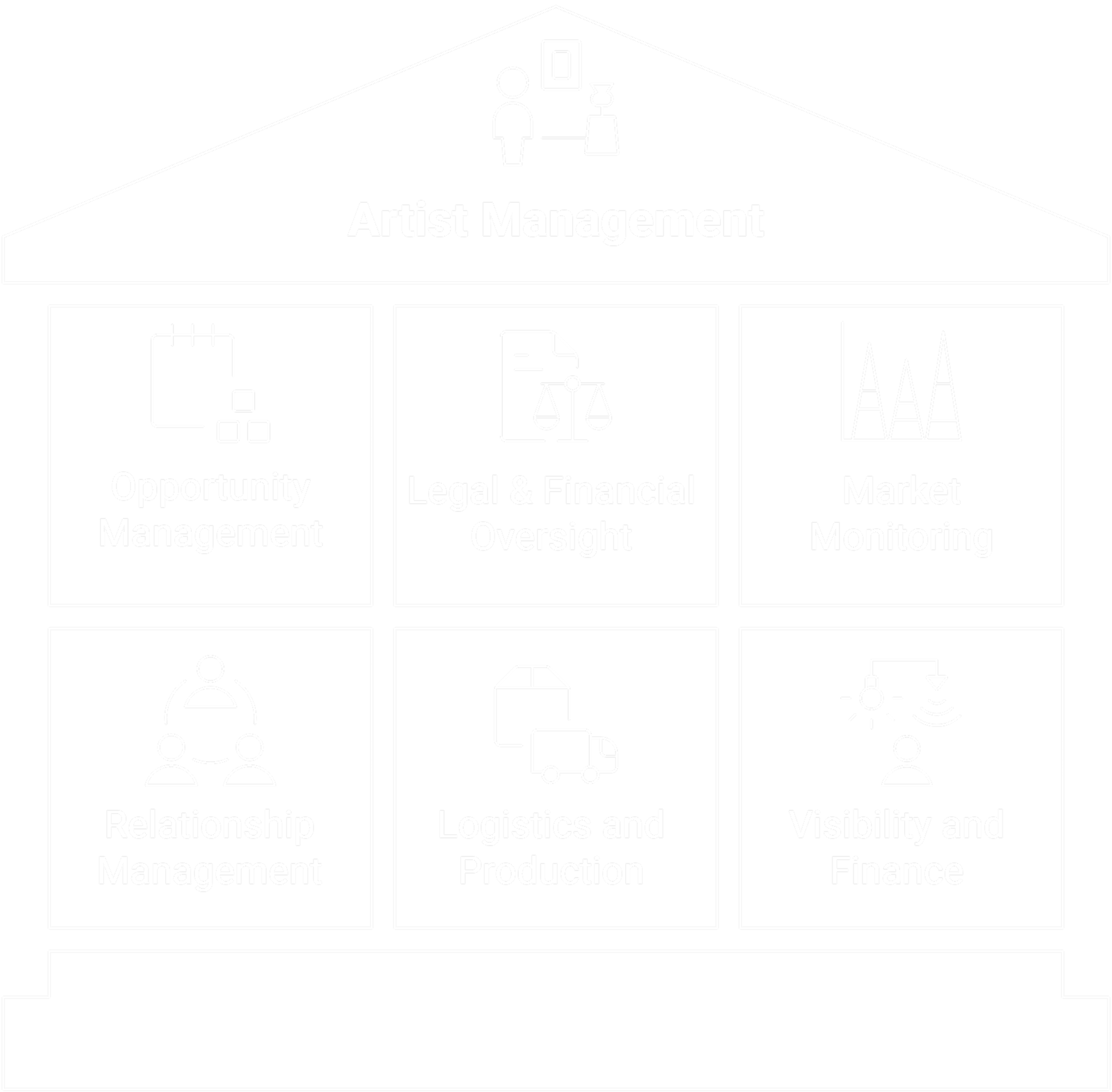
- Opportunity Management: They structure and sequence professional opportunities such as exhibitions, performances, residencies, or collaborations, according to their strategic value and timing, avoiding overexposure or misalignment.
- Legal & Financial Oversight: Agents negotiate and formalize contracts, defining financial terms, production responsibilities, timelines, and usage rights in compliance with professional and legal standards.
- Market Monitoring: They also monitor market dynamics, advising on pricing, edition formats, partnerships, and distribution channels to maintain consistency between artistic output, institutional recognition, and market positioning.
- Relationship Management: As the primary point of contact, artist agents manage relationships with galleries, museums, curators, collectors, and commissioning bodies, coordinating collaborations and communications.
- Logistics & Production: They oversee production logistics from budgeting and scheduling to transport and insurance, particularly for complex or international projects.
- Visibility & Finance: In parallel, they supervise communication and visibility strategies, including press relations and portfolio development, while tracking income streams and identifying opportunities for financial diversification and sustainability.
Fields Within the Cultural Sector
Artist managers operate across multiple sectors of the creative and cultural industries, each requiring specific expertise while sharing the same objective: supporting artists’ careers within a structured and sustainable framework.
| Sector | Core Focus & Activities |
| Visual and Contemporary Art |
Support painters, sculptors, photographers, and multidisciplinary artists in building sustainable careers. They help shape long-term strategy, coordinate exhibitions and art fair participation, manage relationships with galleries, collectors, and institutions, and oversee contracts and sales. |
| Music Industry |
Managers work with singers, musicians, and bands to negotiate with labels and publishers, organize tours and live performances, manage copyright and recording agreements, and coordinate promotion strategies. |
| Film and Audiovisual |
They represent actors, directors, and creatives by identifying projects, negotiating contracts, managing casting relationships, and coordinating media exposure and schedules. |
| Live Performance |
Including theatre and dance, managers oversee programming, touring strategies, residencies, rehearsal schedules, and relationships with venues, festivals, and cultural institutions. |
Across all sectors, effective artist management relies on advanced training, strong professional networks, and a solid understanding of cultural ecosystems.
How to Become an Artist Manager
MBA Programs at IESA International
Students seeking careers in artist management, arts administration, and cultural leadership can pursue specialized MBA programs designed to reflect the realities of the global creative economy. IESA International offers the following programs:

- MBA in Arts & Cultural Management
- MBA in Contemporary Art: Sales, Display and Collecting
These MBAs provide advanced training in cultural strategy, project management, market analysis, and international art market dynamics.
Through academic coursework, applied projects, and professional exposure, students gain a comprehensive understanding of how artistic careers are structured, financed, and positioned globally.
Eligibility and Admissions IESA International’s MBA programs are open to candidates holding a Bachelor’s degree or equivalent qualification.
Prior experience in the cultural or creative industries is strongly valued. Admission is based on application review, an individual interview, and evaluation by the admissions committee.
Professional Success & Choosing the Right Manager
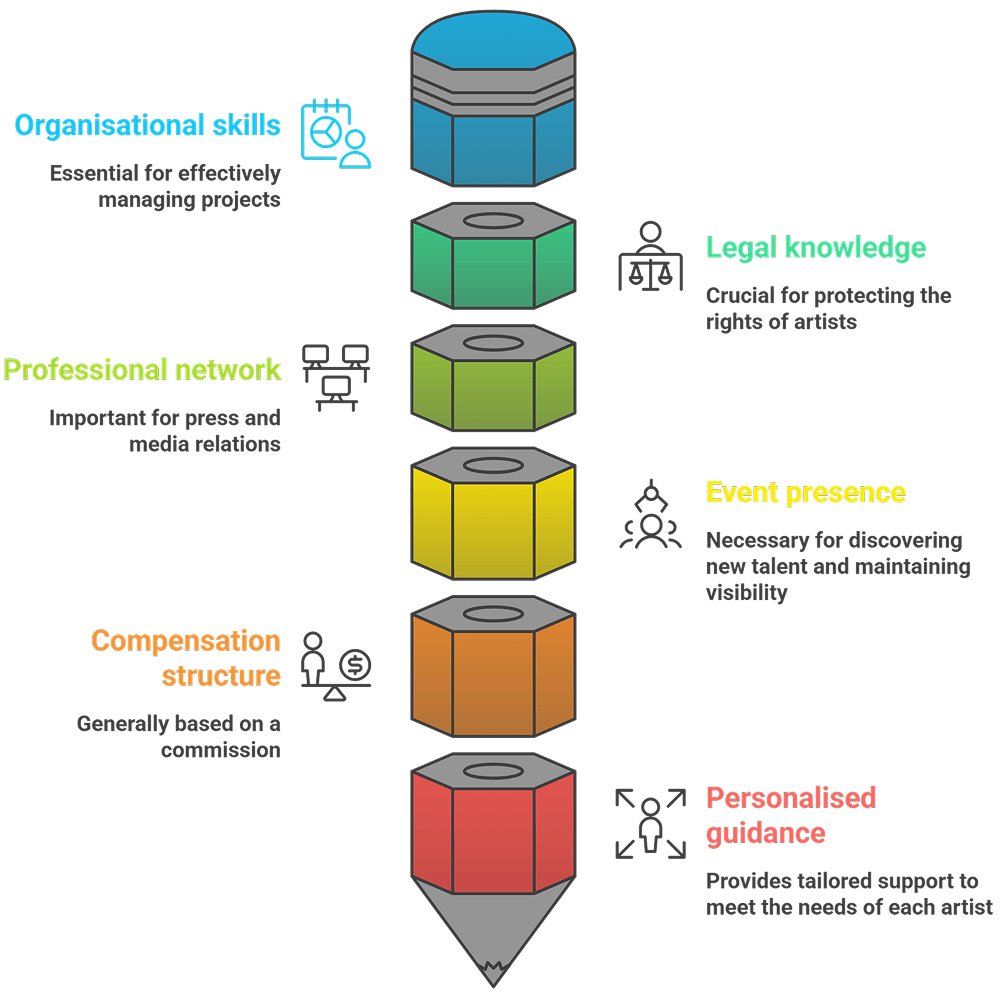
Exceptional organizational skills are the foundation of success in this profession.
An artist manager must have a strong understanding of intellectual property law and be able to carefully review contracts to protect the interests of their artists. Building a solid professional network is essential, particularly for developing effective press and media relationships.
Artist managers often spend evenings and weekends attending exhibitions, performances, and industry events since this is crucial for discovering new talent and maintaining visibility within the field.
Compensation typically operates on a commission basis, with percentages varying depending on the type of placement and the scope of representation.
The most successful artist managers stand out for their ability to provide personalized guidance while simultaneously managing multiple artistic projects with strategy and precision.

 Download application form