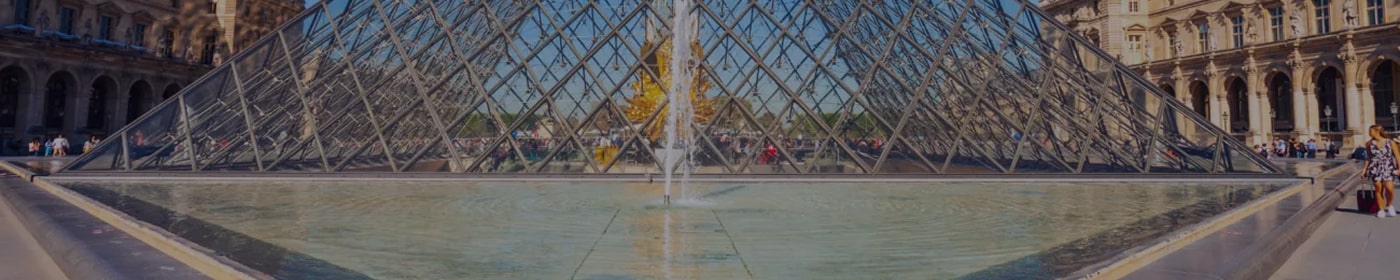
Paris has long been regarded as a global capital of art and culture, but today it is more than a symbolic or historical center. In fact, it is one of the most dynamic, interconnected, and thriving environments to study the art market.
For students seeking real-world exposure to galleries, auctions, museums, fairs, curatorial programming and collecting networks, Paris offers an ecosystem that few European cities can match. The city’s unique combination of academic institutions, commercial players, public museums, and international fairs makes it an unparalleled destination to immerse in the global art world.
Below, we explore the key reasons why Paris stands out, supported by professional insights from curators, gallerists and auction specialists, as well as recent data from Art Basel Paris 2025.
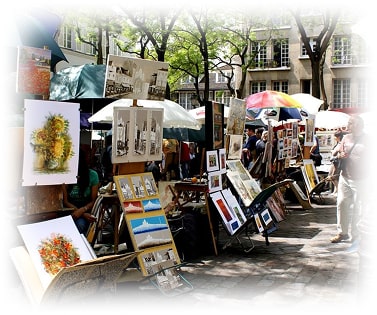
Art-market presence
France has consistently maintained one of Europe’s most active art markets with a notable influence in both primary and secondary sectors. Auction turnover in Paris remains strong, particularly in modern art, design, and specialist categories such as African and Oceanic art and Old Masters.
Galleries, private dealers, and auction houses operate at high volume throughout the year, making the city a reliable site for “market observation”. For students, this means studying the market not abstractly, but from within an active commercial center where transactions occur daily.
Educational institutions built around real-world practice
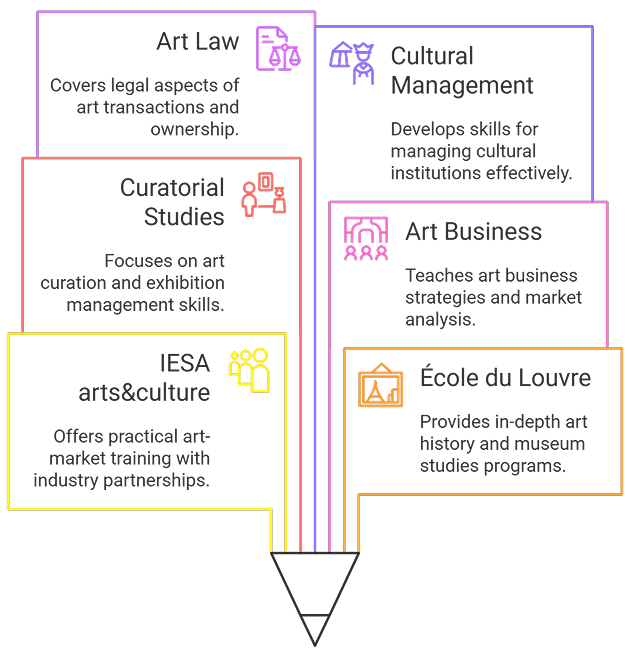
Paris is home to several schools that merge art history with professional art-market training. Institutions such as IESA arts&culture, École du Louvre, and multiple others offer programs focused on curation, art business, art law, museum studies, communication, and the management of cultural institutions.
IESA arts&culture , for example, has solid partnerships with galleries, art fairs, auction houses, museums, cultural institutions as well as other key players within the art and culture sector, ensuring that students gain hands-on experience from the get go.
Internships, studio visits, exhibition projects, auction catalogue work, and curatorial assignments are often built directly into the curriculum, merging academic studies with professional immersion.
World renowned galleries
Paris’s gallery scene is dense, influential, and internationally respected. Global galleries such as Perrotin, Thaddaeus Ropac, Mennour, Gagosian, White Cube, Galerie Lelong, Almine Rech, 303 Gallery, and many others operate alongside a thriving network of mid-sized and emerging spaces at Avenue Matignon, the Marais, Saint-Germain-des-Prés and Pantin.
This creates exceptional learning opportunities: students can observe curatorial decisions, primary-market strategies, artist representation, exhibition planning, edition production, and international logistics by simply visiting or interning at spaces within a few metro stops.
Major Fairs and events
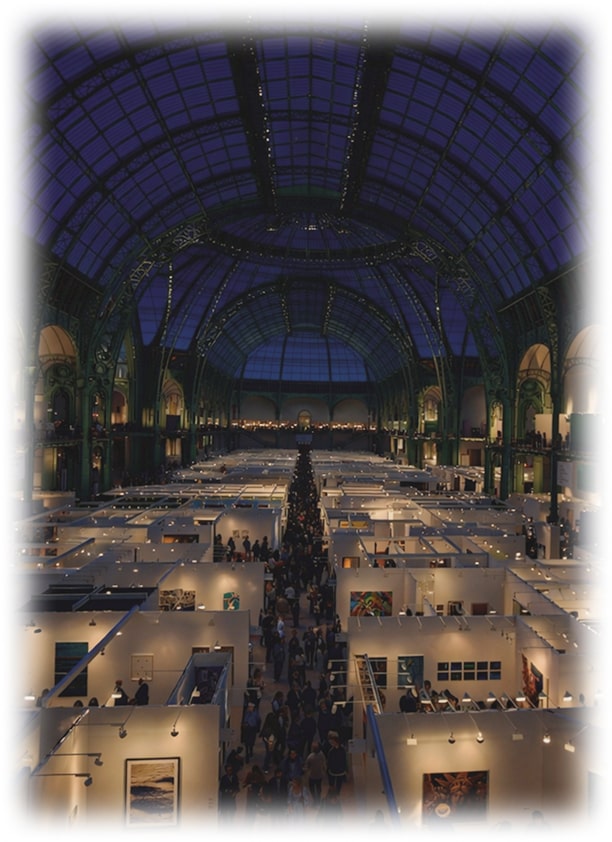
The launch of Art Basel Paris (formerly Paris+ par Art Basel) has elevated Paris to a new level of global significance. The fair took over FIAC and has rapidly become one of the most influential events in the art calendar, bringing leading galleries, collectors, institutions, and journalists into the city each October.
In 2025, the attendance exceeded 73,000 visitors, marking a significant rise compared to previous editions and confirming Paris’s growing pull among global collectors.
Leading museums scheduled acquisitions, curators conducted preview tours, and dealers executed major sales during VIP and preview days. During the art week in October, satellite events also (gallery nights, museum openings, private dinners, and institutional tours) transform the city into an international professional hub for a full week.
For students, these fairs provide the rare chance to observe market negotiations, meet professionals, volunteer at booths, and understand the relationship between commercial visibility and institutional recognition.
Auction houses
Paris is home to major houses including Christie’s, Sotheby’s, Artcurial, Drouot, and specialized players in design, photography, jewelry, and antiquities. These institutions offer invaluable insights into the secondary market, including valuation, cataloguing, legal restrictions, authenticity research, condition assessment, and post-sale processes.
Auction practitioners note that sales in Paris, especially during Art Basel Paris and the fall auctions are among the best professional entry points for students, offering firsthand experience in preview management, lot handling, and collector communication.
Cécile Verdier (Christie’s France) has emphasized that Paris remains a strategic center thanks to France’s strong collecting culture and deep supply of modern and heritage works. She underscores the importance of provenance research and export regulations, areas where Paris offers rich training opportunities due to its robust legal and archival infrastructure.
Museums and cultural institutions
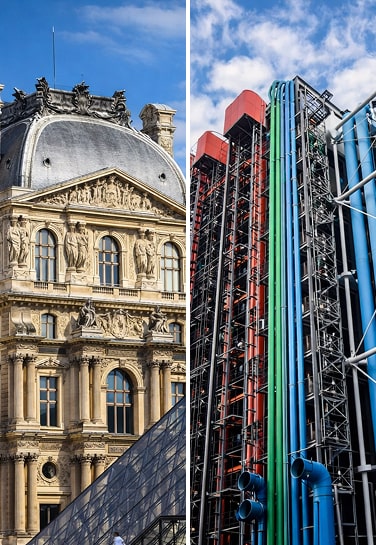
Paris’s museum network: the Louvre, Musée d’Orsay, Centre Pompidou, Musée Picasso, Musée du Quai Branly, Palais de Tokyo, Fondation Louis Vuitton, Bourse de Commerce (Pinault Collection), and dozens of specialized institutions gives students direct access to masterpieces, curatorial discourse, research libraries, and conservation teams.
Curators interviewed across several institutions stress that Paris’s global collections allow students to understand how artworks travel across cultures and historical periods. They advise combining curatorial research with market internships to build well-rounded professional skills.
International and cross-cultural exchanges
Paris attracts global collectors from Europe, the Middle East, the United States, Asia, and Africa.
Its diplomatic and cultural networks (embassies, cultural institutes, foundations, UNESCO) also create opportunities for students to engage with international exhibitions, grants, residencies, and cultural exchanges.
The city’s art schools and market institutions host students from dozens of countries, making Paris a multicultural community where emerging curators, dealers, artists, and advisors form lasting networks.
International and cross-cultural exchanges
Paris attracts global collectors from Europe, the Middle East, the United States, Asia, and Africa. Its diplomatic and cultural networks (embassies, cultural institutes, foundations, UNESCO) also create opportunities for students to engage with international exhibitions, grants, residencies, and cultural exchanges.
The city’s art schools and market institutions host students from dozens of countries, making Paris a multicultural community where emerging curators, dealers, artists, and advisors form lasting networks.
Careers, opportunities, and start-ups
Paris supports a wide range of art-market professions:
- gallery staff
- curators
- registrars
- art advisors
- independent curators
- auction specialists
- art logisticians
- cultural project managers
- communications and press specialists
- museum educators
- digital strategists
- art-tech start-ups
Many professionals begin their careers with internships arranged through Parisian institutions, and the city’s networking culture (vernissages, brunches, conference panels and fairs) means opportunities can arise quickly for motivated students.
For anyone aspiring to work in galleries, auction houses, museums, advisory firms, cultural institutions, or the broader global art ecosystem, Paris provides the perfect environment to learn, practice, network, and grow.
It is a city where history meets innovation, and where the future of the global art market is actively being shaped.
Studying in Paris means learning in context.Paris is not just a city to study art; it is a city where you can become part of the art world.

 Download application form