
Gourmand versus Gourmet: The art and culture of slow food in Europe. CALL FOR PAPERS (deadline: 15 Nov. 2026)
Gourmand vs. Gourmet?
The contrast between the figure of the gourmand [or “foodie”] and the gourmet has been a theme in the Western world since antiquity. Today, the gourmand, a bon vivant, is associated with greed and excess, while the gourmet is associated with moderation, refinement, and discernment. Let’s clarify the terminology. Florent Quellier has shown that throughout history the term “gourmandise” has encompassed the glutton, the gourmand, and the gastronome. In the Middle Ages, the Latin word gula referred to the notion of eating in abundance and with delight but for the Christian Church, it is a vice classified as a deadly sin. In French, the meaning of gourmandise overlapped with gluttony from the 15th to the 18th centuries. The term “gourmet”, initially associated with wine, became established in modern times across European languages to combine moderation in eating with good manners. Then, in the early 19th c., the terms “gastronomy” and “gastronome” elevated the concept of gourmandise by reclaiming it. While the French model of gastronomy (pioneered by Brillat-Savarin and Grimod de La Reynière) stripped gourmandise of its pejorative connotation, Christian morality still defines it as a guilty pleasure.
Issues
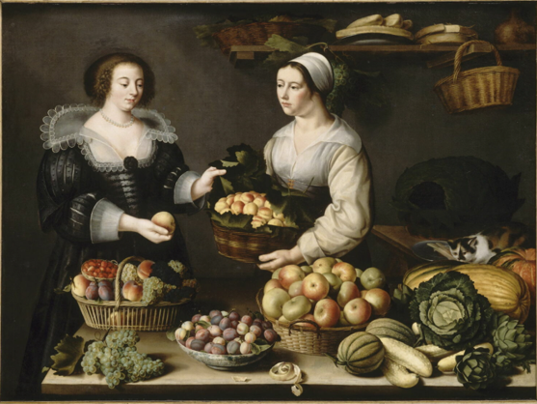
For these sessions, we have instead chosen the term “gourmet” because, beyond the “gastronome” who simply appreciates good food, the gourmet seeks out exquisite dishes and wines as a connoisseur; he or she regards the meal as a distinguished artistic and social experience. Furthermore, “gourmet” and “gourmand” both raise issues of gender and lexicon (in French only?). Not only is a preference for sweet tastes traditionally associated with children and the female gender but [in the French language] the feminine substantive or adjective “gourmande” carries a sexual connotation. Similarly, the absence of the word “gourmette” [a feminine grammatical form] reflects the marginalization of women in the world of gastronomy. The event organized by IESA explores how the gourmand/gourmet ambivalence has been described, criticized, or celebrated over the centuries in the arts in the broadest sense: the material culture of fine dining, the visual arts (fine arts, photography, film), as well as literature, theater, poetry, and music.
Themes
This announcement, rooted in French culture, can of course be expanded to include other horizons. We invite you to explore the “gourmand/gourmet” duality from a global perspective. Here are a few possible themes:
- Conviviality: table manners / etiquette / sensory experience; tasting clubs / gastronomic travels / social distinction
- Religion: dietary rules, prohibitions, fasting, lean/fat days, controversies; monastic gluttony; convent recipes
- Politics: the diplomacy of taste; the cuisine of leaders; practices and influences of princely courts: banquets, cuisine, recipes, vegetable gardens; environment; ecology
- Gender: the role of epicurean women; lexical evolution and gaps; eroticism; objectification and gendered models; acts of resistance; food preparation and consumption
- Colonization: products of the New World; exoticism; acculturation; appropriation; racial differences
A multi-media event
This two-day event [“rencontres”] also aims to delight the palate and engage all five senses: in addition to presentations and panel discussions, you will have the opportunity to visit an exhibition, set tables, participate in tasting workshops, and attend concerts and readings.
How to submit a proposal
Following the bibliography below, you will find a brief historical overview and potential topics focused on French culture (some “ready-to-go”, others intended as inspiration). Comparative proposals from non-European contexts are welcome. The languages of the talks are French or English for 20-minute presentations. We are unable to reimburse travel expenses but meals, coffee breaks, and workshops are covered, as is hotel accommodation (2-3 nights) for non-Parisians.
Presentation proposals must include:
- title
- abstract of no more than 700 words (one page, single-spaced)
- short bio/publications
Please send yours by Sunday 15 November 2026 to:
David Brouzet : d.brouzet@iesa.fr and Pascale Rihouet : p.rihouet@iesa.fr
SCIENTIFIC COMITEE
Frédérique Desbuisson, Université de Reims
Valérie Boudier, Université de Lille
Matthieu da Vinha, Centre de recherche du Château de Versailles
David Brouzet, IESA arts&culture and Ecole du Louvre
Pascale Rihouet, IESA arts&culture and Rhode Island School of Design
David Mandrella, IESA arts&culture
BIBLIOGRAPHY
A table ! Le Repas. Tout un art ! Sèvres, Musée national de Céramique, exh. cat., Montreuil, Gourcuff Gradenico / Limoges, Musée national Dubouché, 2020.
Boudier, Valerie. La Cuisine du peintre. Scène de genre et nourriture du Cinquecento, Tours, Presses universitaires François-Rabelais, 2010.
Brillat-Savarin, Jean-Anthelme. Physiologie du goût, annotated by Pascal Ory, Paris, Menu Fretin, 2026 [1826].
Elias, Norbert. The Civilizing Process, revised ed., Oxford, Blackwell’s, 2000 [1939].
Festins de la Renaissance. Cuisine et trésors de la table, exh. cat., Château royal de Blois, Somogy éditions d’art, 2012.
Gagneux, Yves. Le glouton, le gourmand et le gastronome. Les plaisirs de la table de Balzac à Yourcenar, Paris, Vendémiaire, 2020.
Grimod de La Reynière, Alexandre. Écrits gastronomiques [Almanach des gourmands, 1803 / Manuel des Amphitryons, 1808], Paris, Les Belles Lettres, 2024.
Hashimoto, Chikako. La naissance du gourmand. Grimod de La Reynière et la Révolution française, Tours, Presses universitaires François-Rabelais, 2019.
Janer, Zilkia. The Coloniality of modern taste. A critique of gastronomic thought, London, Routledge, 2023.
Karila-Cohen, Karine, Quellier, F. (eds.), Le corps du gourmand, d’Héraclès à Alexandre le Bienheureux, Tours, Presses universitaires François-Rabelais, 2012.
Krikorian, Sandrine. Les rois à table. Iconographie, gastronomie et pratiques des repas officiels de Louis XIII à Louis XVI, Aix-en-Provence, Presses universitaires de Provence, 2020.
L’Art de manger. Rites et traditions en Afrique, Insulinde et Océanie, exh. cat., Paris, musée Dapper, 2014.
La grande bouffe. Peintures comiques dans l’Italie de la Renaissance, exh. cat., Paris, Lienart, 2017.
La table, un art français du XVIIᵉ siècle à nos jours, Hôtel départemental des expositions du Var, Draguignan, exh. cat., Milan, Silvana Editoriale, 2021.
Les tables du pouvoir. Une histoire des repas de prestige, exh. cat., Musée du Louvre-Lens, Paris, Réunion des Musées nationaux, 2021.
Livres en bouche. Cinq siècles d’art culinaire français, exh. cat., Paris, Bibliothèque nationale de France / Hermann, 2001.
Malka, Lauren. Mangeuses. Histoire de celles qui dévorent, savourent ou se privent à l’excès, Paris, Points, 2023.
Marcia Reed (ed.). The Edible Monument. The Art of Food for Festivals, exh. cat., Los Angeles, The Getty Research Institute, 2015.
Marquet, Bertrand (ed.), Allégories de l’estomac au XIXᵉ siècle. Littérature, art, philosophie, Strasbourg, Presses Universitaires de Strasbourg, 2020.
Mintz, Sidney. Sweetness and Power. The Place of Sugar in Modern History, New York, NY, Penguin, 1986.
Nicolas, Brigitte (ed.), Café, plaisir au gout d’amertume, exh. cat., Port-Louis, Musée de la Compagnie des Indes ; Lorient, Musée d’art et d’histoire, 2022.
Pettigrew, Jane, Richardson, Bruce. A Social History of Tea. Tea’s influence of Commerce, Culture & Community, 2014.
Plaisirs et jeux de pouvoir. Le banquet de Marseille à Rome, Marseille, MAM (Musée d’archéologie méditerranéenne), exh. cat., 2016, Paris, Lienart, 2016.
Quellier, Florent. Gourmandise : Histoire d’un péché capital, Paris, 2010.
Revel, Jean-Francois. Un festin en paroles. Histoire littéraire de la sensibilité gastronomique de l'Antiquité à nos jours, Paris, Taillandier, 2021 [1979].
Stalker, Nancy K. (ed.). Devouring Japan. Global perspectives on Japanese culinary identity, New York, Oxford University Press, 2018
Thé, café ou chocolat ? Les boissons exotiques à Paris au XVIIIe siècle, Musée Cognacq-Jay, exh. cat., Paris, Paris musées, 2015.
Versailles et les tables royales en Europe, XVIIᵉ – XIXᵉ siècles, exh. cat., Paris, Réunion des musées nationaux, 1993.
Victoria Avery (ed.), Feast & Fast: the Art of Food in Europe, 1500-1800, exh. cat., Cambridge, The Fitzwilliam Museum, 2019.
Walvin, James. Fruits of Empire: exotic produce and British taste, 1660-1800, New York, NYU Press, 1997.
You, Yao-Fen. Coffee, Tea, and Chocolate. Consuming the World, exh. cat., Detroit Institute of Art, 2016.
GOURMAND/GOURMET: FOOD FOR THOUGHT (topics focused on French culture)
Prepared by David Brouzet
List of potential topics chronologically presented. We encourage you to broaden its scope by proposing a non-European topic.
Antiquity
In ancient Greece, the “symposium” involved drinking and discussing noble topics at the end of the meal whereas guests at Roman banquets often indulged in the pleasures of food with excess and ostentation.
- Archestratos, a Greek poet, gastronome, and great traveler of the 4th century B.C.E.
- Plato versus Marcus Gavius Apicius
- Representing the banquets of the Gods
The Middle Ages
In the Middle Ages, the deadly sin of “gluttony” (“gourmandise” in French) did not prevent the clergy from granting themselves all manner of exemptions, which gave rise to many refinements (and delicious monastic products) nor did it stop the elites from making the banquet a manifest expression of their power.
- The Popes of Avignon: Grand Tinel, Châteauneuf vineyards, and delicacies along the banks of the Sorgue
- The Château du Vivier and the Chalou-Moulineux ponds: days of fasting in royal castles
- Monastic and Palace Kitchens: La Conciergerie; Château-Thierry; Fontevrault; and Montreuil-Bellay
- Desserts invented by gourmet monks and nuns: Cormery macaroons; the SCOFA (Sugar, Cream, Egg, Flour, Almond) of the Carmelites of Niort; and the painillons of Chalaronne
- Charles V and Taillevent: cuisine as soft power and outreach
- The Pheasant Banquet at the Court of Burgundy
The Renaissance
The men and women of the Renaissance enthusiastically and curiously introduced new products from other continents. Above all, they affirmed the primacy of the rules of etiquette to be observed at table. By contrast, Rabelais mocked civility.
- Pope Martin V and his cook, Jean de Bockenheim
- Platina: A Humanist Librarian and Gastronome in Rome in the mid-15th century
- Dining with Erasmus or with Rabelais?
- Agostino Chigi and the produce of the New World (depicted by Raphael in the Loggia of Villa Farnesina, Rome)
- A gourmet queen? Catherine de’ Medici and the true/false introduction of Italian table manners to the French court
- Montaigne: the great gastronomic tour
- Feast of the Gods in Renaissance painting
17th century
In the 17th century, a taste for pomp and ceremony prevailed. Dining remained a highly codified art but the typology of tableware evolved, and recipes grew simpler both at court and in the city. Certain foods became all the rage and triggered outrageous behavior, hence the satire of moralists.
- Poets at table: Saint-Amant, César Pellenc: libertine dining?
- From La Varenne to Massialot: a royal model for everyone?
- Evolution of royal dining at the time of the Royal Orchard and La Quintinie in Versailles
- Peas, artichokes, and chocolate: the excitement over new foodstuffs
- Gnathon the glutton (La Bruyère, Les caractères) versus the Précieuses
18th Century
Under Louis XV, increasingly refined aristocrats developed a passion for the subject, hired the greatest chefs, and lent their names to recipes. This enthusiasm was inevitably associated with libertinism and inspired fantasies and caricatures.
- still life paintings for the Regent by Alexandre-François Desportes at the Palais-Royal (today in Musée de la chasse et de la nature, Paris); Villers-Cotterêts, a Mecca of gastronomy: myth or reality?
- Women as hosts / women as guests (ex: Madame du Barry and the first “cordon bleu”)
- Louis XV at Choisy and the Petit Trianon: from the vegetable garden to the “flying table”
- Frederick II of Prussia: Who said only the French were gourmets?
- The Russian dilemma: Catherine II of Russia and French Models: The splendor of Louis XIV’s “Grand Couvert” or the delicacy of Louis XV’s “Petits Soupers”?
- Reality and fantasy at Louis XVI’s table: the modernization of meals sought by Louis XVI versus revolutionary caricatures depicting him as a gluttonous king
- A glimpse into the privacy of dining: Marie Antoinette and her sisters-in-law
- Recipes for aristocrats: Du Barry soup; Saint-Germain soup; Soubise sauce; whipped [Chantilly] cream; Contades pâté.
19th century
The First Empire saw the emergence of the term “gastronomy” and the triumph of its proponents (Grimod de La Reynière, Brillat-Savarin, etc.). The focus was no longer on conversation, as it had been under the Ancien Régime, but on tasting. A conflict quickly arose between epicureans and thinkers who advocated moderation, not merely for moral reasons this time but for health and even social reasons.
- Talleyrand: true gourmet or political gourmet?
- Ruling gourmets : Grimod de La Reynière / Brillat-Savarin / Joseph Favre
- The gourmet historian and geographer: Jules Michelet
- Alexandre Dumas, The Great Dictionary of Cuisine
20th Century
In the 20th century, the gap widened between gourmets who may dine at Michelin-starred restaurants and everyone else, condemned to make do with mass-produced food. It grew between proponents of tradition and those of modern cuisine - sometimes molecular - and advocates of globalized, fusion cuisine and that of our regions. The Michelin and Gault & Millau guidebooks lay down the rules. Television and social media have become indispensable influencers.
- National Route 7 and the birth of the Michelin-starred restaurant
- A queen Among presidents: Elizabeth II of England at the tables of the Elysée palace and the Louvre
- Karen Blixen or the mystical experience (Babette’s Feast)
- Gourmet presidents
> Charles de Gaulle and the kitchens of the Grand Trianon: the great tradition of Auguste Escoffier
> Valéry Giscard d’Estaing and Paul Bocuse (VGE soup; “Le Président” cake, formerly “Montmorency”),
> François Mitterrand: the banned ortolans
> Jacques Chirac and gourmand populism
- The revival of 19th-century republican banquets
- Female TV journalists and influencers, from Maïté to Julie Andrieux (Les Carnets de Julie) and Emmanuelle Jary (C’est meilleur quand c’est bon)
Gourmets / Food Lovers in the 21st Century?
Environmental issues naturally come to mind. The preparation and consumption of certain foods are even said to be gendered: for example, the controversy surrounding the barbecue, seen as an expression of so-called toxic masculinity. The choice of dishes can be seen as discriminatory (see, for example, the controversy surrounding the banquets of the Canon Français). The gallery of portraits of gourmets and gourmands has expanded considerably, including the way cinema portrays them.

 Download application form